Children’s sledges: which model to choose in French-speaking Switzerland? Types, ages and safety
Between the plastic sledge, the steerable bob and the traditional Davos, it’s easy to get lost. Here’s the full picture, with practical advice for choosing the right sledge for our children in French-speaking Switzerland.
 Michael Ambass
4 min read
Michael Ambass
4 min read
Why the right sledge changes everything
A sledge suited to your child’s age and to the terrain means more control, fewer scares and snow outings that are genuinely fun. We help you get it right, without over-equipping or breaking the bank.
How to choose in 30 seconds
- Your child’s age and height (stability, seat, a harness for the youngest)
- Control and brakes (steering wheel, runners, side brakes, or simply leaning)
- The terrain you have in mind (a small park, a marked run, a resort sledging route)
- Weight and transport (carrying it on a chairlift, pulling it several hundred metres)
- Budget and durability (plastic vs wood, replaceable parts)
The main types of children’s sledge
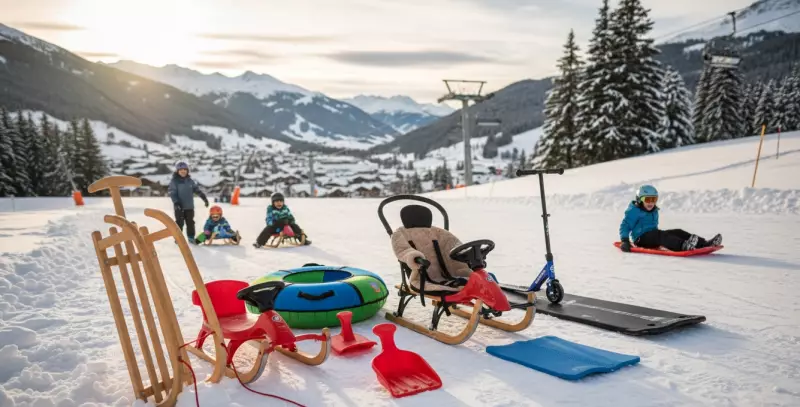
The classic plastic sledge
Light, inexpensive and simple, you find it everywhere. Versions with side brakes give a minimum of control for children from 4–5 years.
Bob with steering wheel and brakes (“snow racer” type)
A longer frame, precise steering and effective brakes: you hold your line on groomed runs. Ideal from 5–6 years for children who like to “drive”.
- Strong points: steering, brakes, stability at speed
- Limits: heavier, more expensive, bulky in the boot
Wooden Davos-type sledge
Sturdy, long-lasting and repairable, it glides beautifully on groomed snow. You steer by leaning and using your feet, which takes a little practice (from 6–7 years).
Sledge mats and “bum sliders”
Ultra light and cheap, perfect for the first slides close to home. It goes fast, but there are no brakes: keep them for mini slopes and under supervision.
Baby sledge with backrest and harness
A wide base, a backrest, a harness and sometimes a warm cover: you can take baby out from 12 months on very gentle terrain. Not made for going down slopes, but great for discovering the snow.
Inflatable sledge
Comfortable and cushioning, great fun in powder. More fragile (punctures) and less precise for turning; better from 6–7 years.
Snow scooter
You stand up and carve a little as you would on a scooter. Use it in authorised areas or on small open slopes, from 6–8 years depending on confidence.
Airboard (front-lying inflatable)
A real thrill: you steer with your body weight and a helmet is essential. Better for pre-teens and teenagers, and on dedicated routes.
Safety and comfort: the winning trio
A ski helmet every time, warm gloves and goggles to cut the wind. Choose wide slopes with no trees or roads, and teach children to brake before they “let go”.
Express maintenance
Rinse the sledge to remove salt and sand, dry it thoroughly, then store it under cover. On wooden models, tighten the screws; on plastic ones, check the brakes; a light wax on metal runners improves the glide.
Where to buy or hire in French-speaking Switzerland
You’ll find good models at Decathlon, SportXX, Ochsner Sport, Jumbo, Manor and online at Galaxus. Many resorts hire out bobs and sledges (Les Diablerets, Leysin, Les Paccots, La Berra, La Vue-des-Alpes). Also think second-hand on Ricardo, Anibis or at local sales.
Indicative budget
Plastic: CHF 20–60. Bob with steering: CHF 80–180. Wood (Davos): CHF 120–250. Baby: CHF 40–100. Inflatable: CHF 25–70. Sledge mat: CHF 5–15. Snow scooter: CHF 70–200.
Where to go sledging with children in French-speaking Switzerland
To get started, a neighbourhood park or a gentle mound is enough. For dedicated runs, head to Les Diablerets, Les Mosses, Leysin, La Berra, Les Paccots or La Vue-des-Alpes depending on your canton.
Quick guide by age and use
- 1–3 years: baby sledge with a harness, flat ground only
- 4–6 years: plastic with brakes on small slopes; a sledge mat on a very slight incline
- 6–9 years: bob with steering or a Davos on a marked run; inflatable, taken gently
- 9–12 years: Davos or bob on sledging routes; snow scooter in authorised areas
- Teenagers: a sporty Davos, a top-end bob, an airboard on dedicated runs
Parents’ tips
Shorten the rope to keep control on the way up, and attach a label with your phone number. Take a strap or a carabiner: handy for hooking the sledge onto a chairlift or a rucksack.
To make the snow season last
Have a look at our guide to winter holidays with a baby or a toddler, with our gentle resort ideas and the packing checklist. And when summer comes, head for our summer toboggan runs in French-speaking Switzerland.