How to turn a simple activity into a learning moment
Good news for our busy schedules: learning can happen anywhere, without setting up the perfect workshop. At home, on the bus or in the park, every small action becomes a chance to explore, count, compare and talk. Here are our practical ideas, tailored to family life in French-speaking Switzerland, for slipping a little learning into everyday life.
 Michael Ambass
3 min read
Michael Ambass
3 min read
The idea in brief
No need for fancy equipment or a teacher’s lesson plan. You start from a simple activity and add one small learning intention: a new word, a quick calculation, an observation.
4 principles that change everything
- Start from your child’s interest and name the day’s intention in one sentence
- Ask an open question rather than giving the answer
- Break it into micro-challenges of 2 to 5 minutes, then praise one specific thing
- Connect it to real life here: prices in CHF, bus timetables, the local weather
At home, without complicating things
You keep the family’s rhythm and slip a mini mission into what you are already doing. Two or three minutes are enough for your child to feel involved.
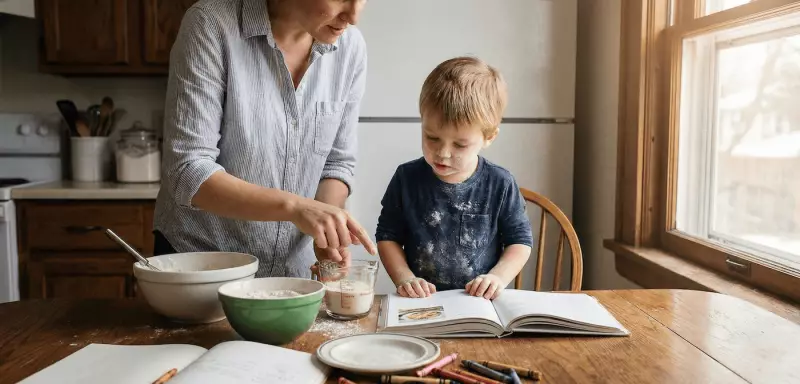
Cooking in Lausanne or Fribourg
Weighing out 150 g, doubling a recipe, watching what melts or rises. You are doing maths and science without realising it, and building vocabulary for textures.
Laundry and sorting in Geneva or Neuchâtel
Sorting by colour, reading the pictograms, setting the machine to 30 or 40 degrees. You work on categorising, independence and reading everyday icons.
Tidying the bedroom in Sion
Creating 3 category boxes, deciding where each object goes and explaining why. You develop logic and a sense of order without an endless battle.
Out and about close to home
Make the most of public transport and errands to practise reading, orientation and mental arithmetic. It anchors learning in everyday life here.
On public transport: TPG, TL, CFF
Reading a map, counting the stops to Cornavin or Ouchy, estimating the arrival time. Ideal for the notion of time and local geography.
Shopping at the market, Migros or Coop
Comparing prices per kilo, weighing the apples, paying and checking the change in CHF. You practise numbers and politeness with shopkeepers.
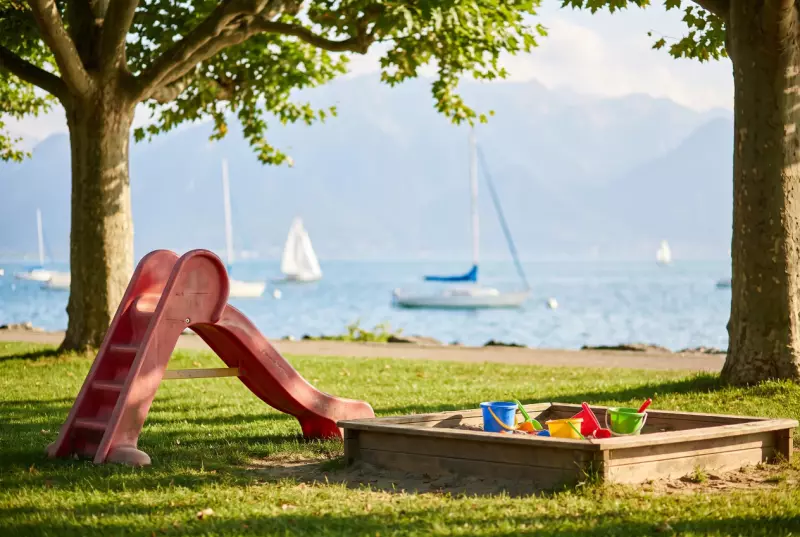
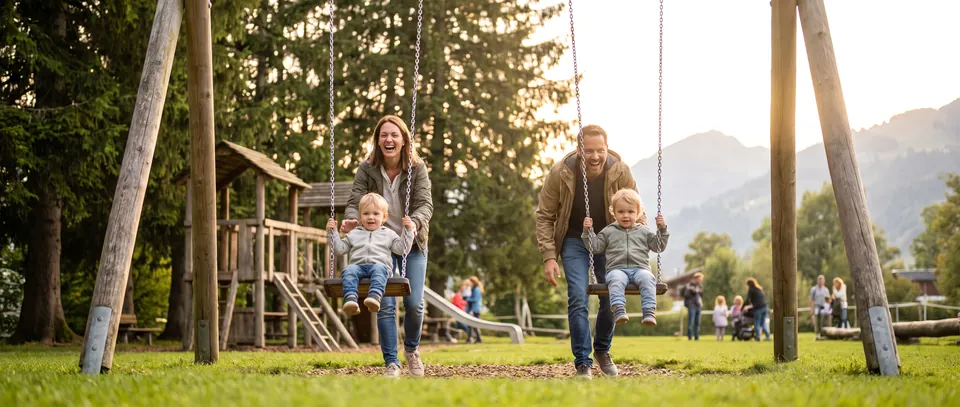
The park, Lake Geneva and the Jura
Identifying 3 different leaves, measuring a jump with a piece of string, listening to the birds. Science, motor skills and attention to the environment, disguised as play.
Rainy days: express ideas
- A word hunt in an advert or a catalogue, then invent a sentence
- A measuring workshop with cups, bottles and a funnel in the bath
- A mini home escape room: visual clues, a combination padlock, a map of the living room
Adapting to your child’s age
- 3 to 5 years: touch, name, sort, count to 5 with large objects
- 6 to 9 years: read short pieces of information, do small calculations, explain a choice
- 10 to 12 years: plan, compare options, estimate and then check their assumptions
Small rituals that help
Announce the day’s mission in one sentence before starting, then mark the end. Repeating this ritual 3 or 4 times a week creates a pleasant habit.
Simple tools, zero hassle
A notebook, a pencil, a piece of string, a few clothes pegs, a small ruler and a watch are enough. You slip them into the backpack and you are ready to learn anywhere.
Safety and limits, to keep it fun
Stop when energy drops and avoid turning every outing into a test. What matters is curiosity and shared enjoyment, not performance.
Going further
Looking for more screen-free ideas? Discover our 7 educational games to build logic and creativity, from age 3.