Activities for children aged 6 to 9: our ideas in French-speaking Switzerland
 Michael Ambass
4 min read
Michael Ambass
4 min read
This is the age when everything opens up. Children can read, understand rules, want to do things themselves and love being given a real mission. The outings that worked at 4 already bore them; the ones for teenagers are still beyond them.
Here are our ideas tailored to this pivotal age group, with what makes each one suitable. The minimum ages given come from the venues themselves: check them before booking, as they change.
What changes between 6 and 9
Children stay with an activity for longer, accept waiting their turn and follow a three-step instruction. Above all, they start wanting to succeed at something, not just to have fun. It is the ideal age for outings where you take on a challenge and come away with a small sense of pride.
Two classic traps: overestimating them on fear (the dark, heights and noisy groups are still daunting) and underestimating them on curiosity (they understand far more than you think).
Outings where they gain independence
This is where the 6–9 age group comes into its own: venues start letting them do things on their own.
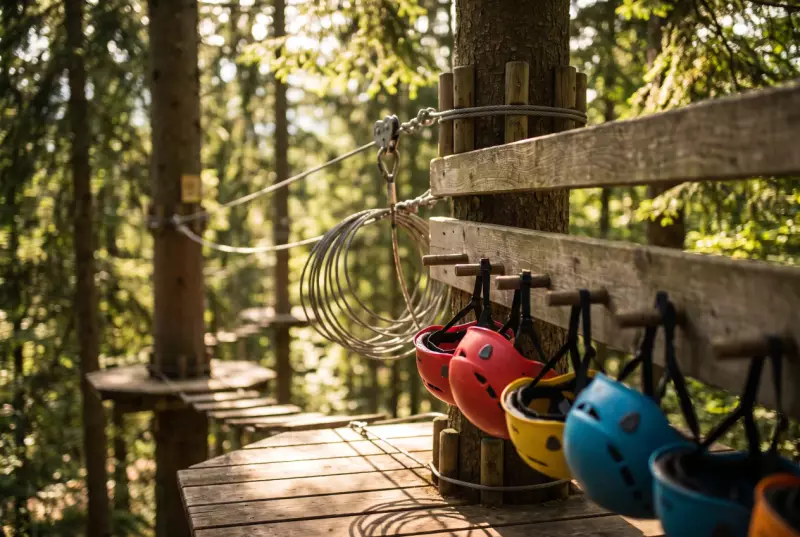
- Parc Aventure Chaumont, above Neuchâtel: the Super Kids course welcomes 6 to 7 year olds (minimum 125 cm) accompanied by a parent, and from age 8 the self-belay courses open up. Watching them clip in on their own for the first time is worth the trip.
- La Maison d’Ailleurs in Yverdon has a family escape room from age 8, with simplified puzzles and clues designed for children.
- Still on puzzles, our guide to escape games for children sets out what works at what age.
Outings that feed their curiosity
At 6 to 9, children want to know how it works. Hands-on museums are spot on.
- L’Espace des Inventions in Lausanne targets precisely the heart of this age group: you operate things, you fail, you try again.
- Le Vivarium de Meyrin recommends visiting from age 6, with its 200 reptiles and weekend feeding sessions.
- Our full selection of interactive museums and aquariums and vivariums.
Real adventures, in the right dose
It is the perfect age for a first underground expedition. Les Grottes de Vallorbe can be visited from age 5, independently and at your own pace, with an underground river and a treasure of crystals at the end. All our caves and mines.
Outdoors, gorges and waterfalls and themed nature trails work very well: enough walking to feel like an explorer, short enough to avoid the grumbling.
Burning off energy properly
At this age, energy is not negotiable, it has to be spent. Treetop and adventure parks, summer toboggan runs, minigolf and pedalos are tailor-made for them, with the right balance between independence and safety.
Without spending a franc
Playgrounds are not always enough at this age, but big parks and walks with a goal work very well. See our free activities in Lausanne, in Geneva and in Valais.
Our tips for this age group
- Give them a role: reading the map, timing, choosing the route. Being involved completely changes the mood of the outing.
- Check height, not just age: many activities require a minimum in centimetres. Announcing a zip line and then being turned away spoils the day.
- One challenge, not three: at 6 to 9, they want to succeed. Stacking up new things dilutes the sense of pride.
- Watch out with siblings: what suits an 8-year-old often excludes a 3-year-old. Favour venues offering several levels in one place.
- Let them tell the story: in the evening, asking “what did you manage today?” anchors the memory far better than a photo.
Are your children younger or older? Find our ideas for 0 to 3 year olds, 3 to 5 year olds and teenagers aged 12 to 16.
And to receive our best outing ideas every week, join the 1000+ families subscribed to the Kidora newsletter.